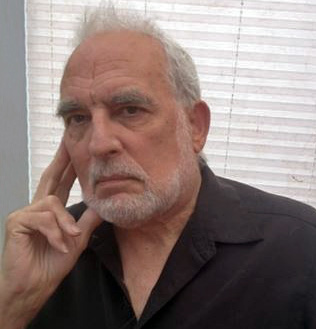
Born in Nuneaton in 1944, raised in northwest London, Jeffrey Green worked in Uganda 1968-1970 for National and Grindlays Bank, Kampala. He travelled to Zimbabwe and Cape Town, and spent over three months around the U.S.A. by Greyhound bus, returning to work in London, Northamptonshire then Sussex as an export manager for two British manufacturers. His liking for black jazz of the 1920s led him back to South Carolina in search of information for London jazz historian John Chilton.
Documents obtained in Charleston, S.C. assisted Chilton whose A Jazz Nursery: The Story of the Jenkins’ Orphanage Bands was published in 1980 (and is dedicated to Green). Green researched the story of one of the sons of that orphanage’s founder, and in 1982 had Edmund Thornton Jenkins: The Life and Times of an American Black Composer, 1894-1926 published by Greenwood Press. Jenkins had attended the Royal Academy of Music, London from 1914 to 1921. During that research contacts were made with veterans, and the children of veterans, often of West Indian descent. Enthused by research he looked into the activities of other black people in Britain in the early 20th century, publishing in a range of journals – generally four pieces each year.
Many of these articles were about musicians. Storyville (London), the Black Perspective in Music (New York) and the Black Music Research Journal (Chicago) each published several pieces. He had multiple articles published in both Immigrants and Minorities and New Community (London). He was getting known to some academics, and was invited to present papers at their conferences. A 1984 London Institute of Education paper was rewritten and published by the Journal of Caribbean History (“West Indian Doctors in London”: June 1986).
He got to know Miss Amy Barbour-James, born of Guyanese parents in London in 1906, and the Jamaican Leslie Thompson who had settled in London in 1929 aged 28. He helped edit Thompson’s autobiography, which was republished in 2009 (Swing from a Small Island: The Leslie Thompson Story London: Northway Publications). Thompson had told him about Dr J. J. Brown of Hackney, and Green took Thompson to Norfolk for a reunion with the doctor’s son Leslie (born London, 1909).
Another veteran, Frank Alcindor, born in London in 1912, had been 12 when his Trinidad-born doctor father John Alcindor died, but his mother had spent the war years with Frank’s wife who was able to add considerable details. The results were published in Immigrants and Minorities (July 1987) as well as in that “West Indian Doctors” article. Dr Alcindor had been an associate of Edmund Jenkins, as had Amy Barbour-James’s father John.
John Barbour-James had transferred in the colonial post office to Ghana (then the Gold Coast) where he worked from 1902 to 1917. That black West Indians had management roles in colonial West Africa was not well known, but the alas short-lived Ghana Studies Bulletin published an article. In checking the British Guiana newspapers he found out about Oxford law student Edward Nelson who became an officer of the Oxford Union in 1900 (New Community published an article). In May 2010 the National Portrait Gallery, London, accepted his donation of two original Barbour-James photographs: Amy B-J in the 1930s, and her parents ca 1905.
His research had the support of Christopher Fyfe, Reader in African Studies at the University of Edinburgh. He suggested that, having written about Jenkins, Green’s attention should be on another black composer in Britain, the London-born son of a Sierra Leonean doctor, Samuel Coleridge-Taylor.
The music and career of Coleridge-Taylor (1875-1912) had been an influence on Jenkins. The 1915 biography did not seem totally reliable. After a brief note was published in a Croydon newspaper, he received a letter from Marjorie Evans who claimed to be Coleridge-Taylor’s half-sister. Born in 1896, she had a lively personality and clear memory, recalling Dr Alcindor and others she had met at her famous relative’s home in Croydon.
Having spent many Saturdays at the newspaper library in London, in the library of the Royal Commonwealth Society looking at their copies of the West India Committee Circular, and Colonial Office Lists and blue books, Green added the music library in Buckingham Palace Road to his haunts and started detailed research on Coleridge-Taylor. Invited by Paul McGilchrist to accompany him to the Royal College of Music Black Perspective in Music published two articles – for editor Eileen Southern was well aware of Coleridge-Taylor’s importance for black Americans. Later Green edited the Coleridge-Taylor edition of the Black Music Research Journal (Vol 21, No 2 Fall 2001).
In 1998 Frank Cass published Green’s Black Edwardians: Black People in Britain, 1901-1914. It included almost 50 photographs. The Oxford Dictionary of National Biography commissioned articles (21 were in print, January 2010: another seven should appear in late 2010) as did the Oxford Companion to Black British History and the New Grove Dictionary of Jazz. History Today had “Before the Windrush” (October 2000). Radio, television and public lectures (Museum of London, National Trust, British Library, East Yorkshire Record Office) continued.
Jack McCray and Karen Chandler had formed the Charleston Jazz Initiative and invited Green to participate. He attended the CJI meetings in South Carolina 4-6 June 2010.
Green’s biography of Coleridge-Taylor is written and is under consideration by a London publisher.
Another book, a study of six Congo pygmies, the big-game hunting colonel who brought them to England in 1905, and the interpreter who worked with them for half of the 30 months they spent in Britain and Germany, also awaits a publisher. They have been outlined by Green in History Today (August 1995) and in Bernth Lindfors (ed), Africans on Stage (Indiana University Press, 1999) as well as in Black Edwardians. He presented a paper on them at the Pitt Rivers Museum, Oxford, in early 2009.
Articles by Green appeared in Vol 30, No 1 (Spring 2010) of the Black Music Research Journal (Chicago), the second of two issues edited by Howard Rye, documenting the Southern Syncopated Orchestra. The BASA (Black and Asian Studies Association) Newsletter is scheduled to carry an article on J. Sargent, and a review of a CD of recordings by Reginald Foresythe. There will be further cooperation with Mick Sawyer of Reeljems in the television programme about Coleridge-Taylor. Green is also involved with the Black Europe project to document the sounds and images of black people in Europe before 1928, a planned boxed set of CDs, a DVD, and illustrated book that is scheduled to be issued in late 2010 by Bear Family Records. In this he is associating with Rainer E. Lotz, Howard Rye and Horst J. P. Bergmeier. Some 2,000 recordings have been identified, those of the Congo pygmies of summer 1905 being the first commercial recordings of Africans in Europe.
Pages entitled “Black London/Britain” with a year, are to support Green’s belief that black British history is a broad subject. The symbolism of the arrival from Jamaica in 1948 of the Empire Windrush has somehow fixed the black presence as a post-war phenomenon. In 1998 the Independent (London) published his “The black middle class has a history”, see www.independent.co.uk/arts-entertainment, which tried to remind readers that black Britain did not start with that ship’s arrival in 1948, and there were several strands to the activities of black people. Studies that emphasize four groups in earlier times (sailors who were temporary residents in ports; students destined to return to their natal lands; entertainers, generally from the U.S.A.; and a handful of professionals who settled) usually ignore the riches that a wider search can harvest.
—oOo—
The pages on this site contain documentation, images, and details that generally relate to the activities of black people in Britain. Page 40 was reached at the end of January 2010, page 60 in May 2010. More pages are being added, steadily. Modifications and amendments are made, usually a result of more information.
Enjoy them all – just click on the page (right-hand side) and please feel free to make contact. Click on an image to leave a response.